Summary
일반적으로 multiclass classification의 output layer로 사용되어 각 클래스 별 확률 값을 반환하는 용도로 자주 사용된다.
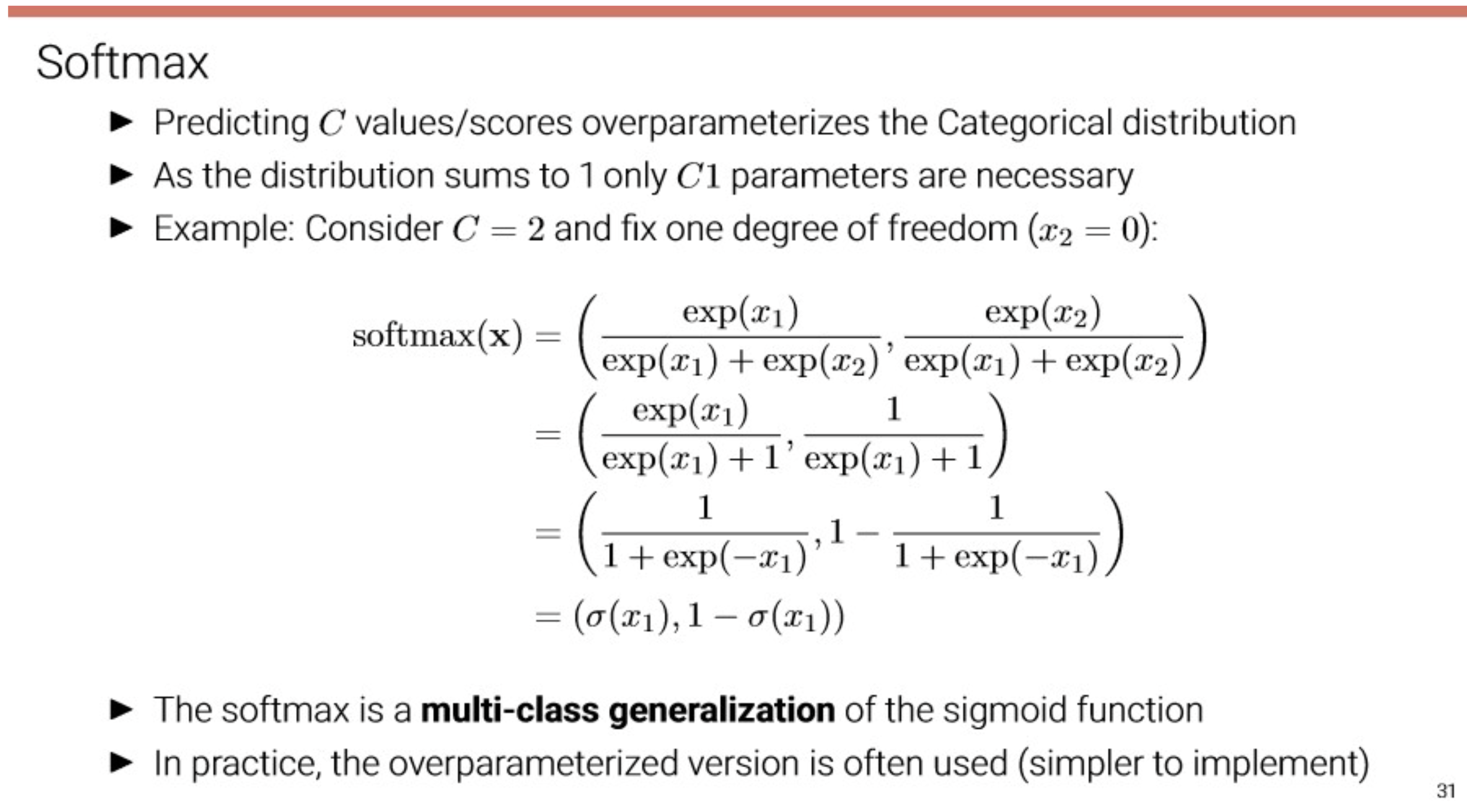
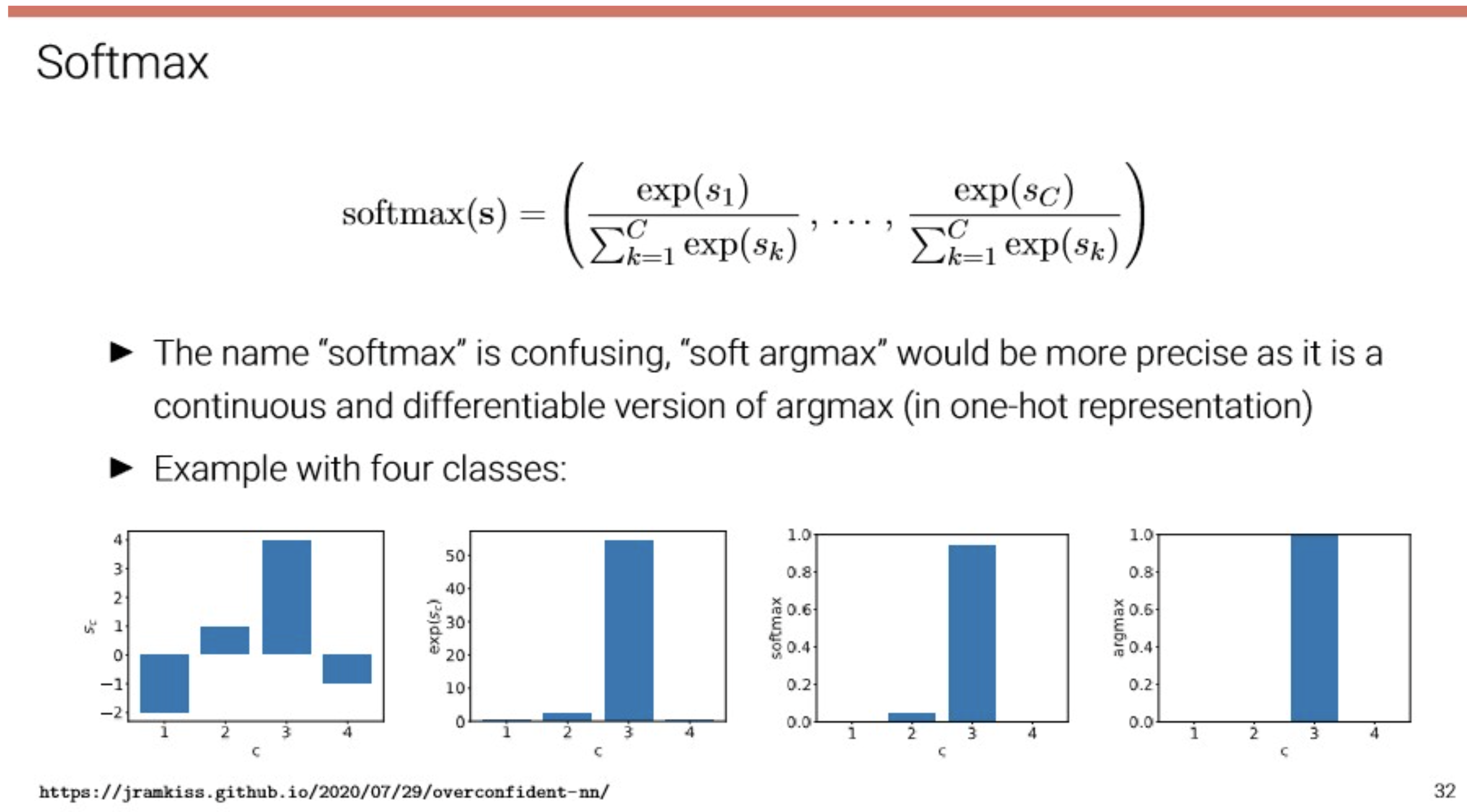
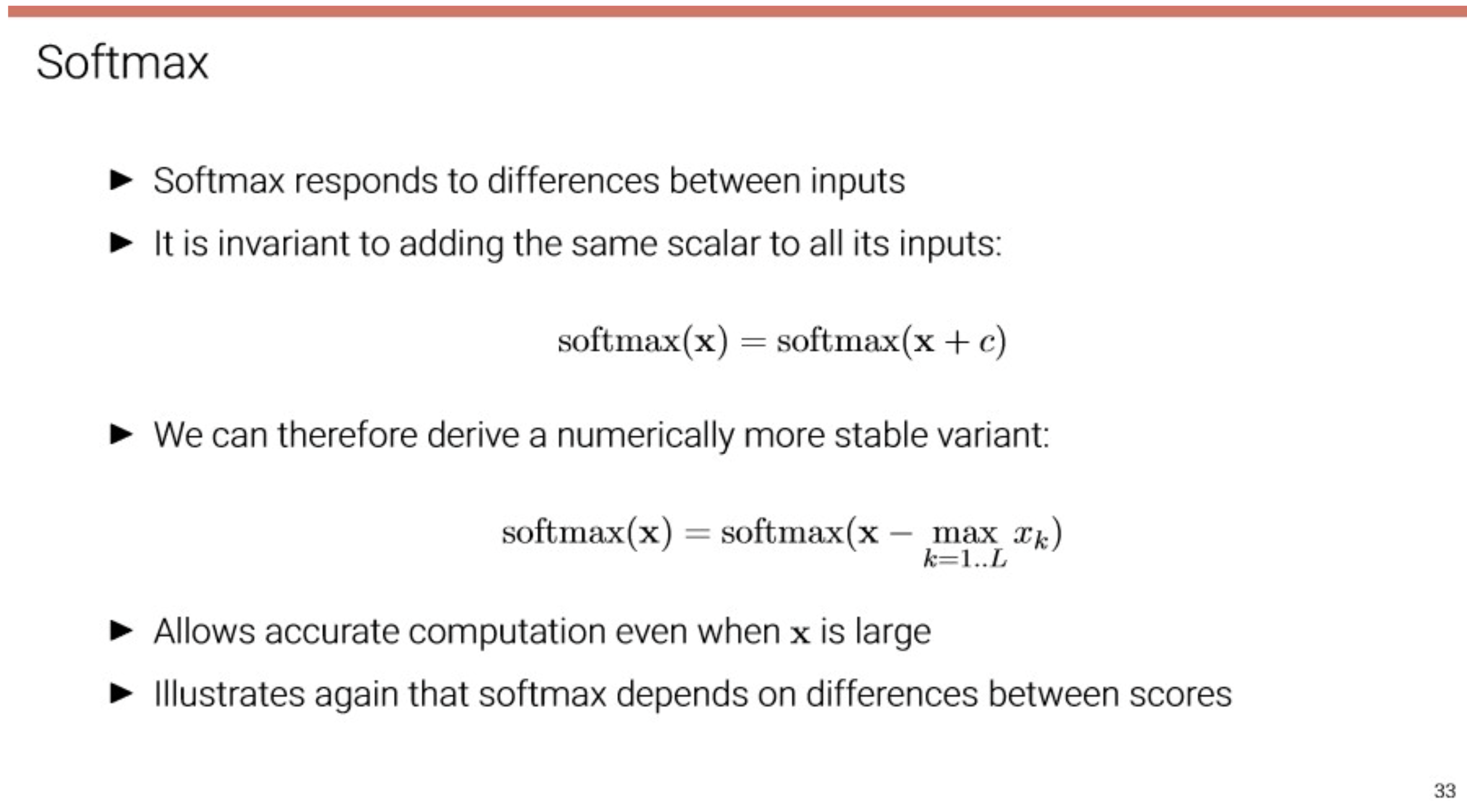
softmax implementation-2(stable)
softmax는 구성 식에 exp 함수가 들어가는데, logit이 커지면 값이 폭발적으로 증가하므로, 범위를 줄여줄 필요가 있다. 따라서 아래와 같이 구현하면 좋다.
def softmax_stable(x: list[float]) -> list[float]:
	c = np.max(x)
	exp_x = np.exp(x-c)
	sum_exp_x = exp_x.sum()
	return exp_x / sum_exp_x
mini-batch version softmax
def softmax(x):
	if x.ndim == 2:
		x = x.T # transpose를 해야하는 이유 <- np.max의 return이 row vector이니,,
			x = x - np.max(x, axis=0) # for stability
		y = np.exp(x) / np.sum(np.exp(x), axis=0) # softmax
		return y.T
	x = x - np.max(x)
	return np.exp(x) / np.sum(np.exp(x))
Softmax
How can we ensure that predicts a valid categorical(discrete) distribution?
- should guarantee
- element-wise sigmoid as output function would ensure(1). but not (2)
→ therefore, in this case, use softmax.Let denote the network output after the last affine layer(=scores). Then:
Remark: is a direct contribution to the loss function, i.e., it does not saturate