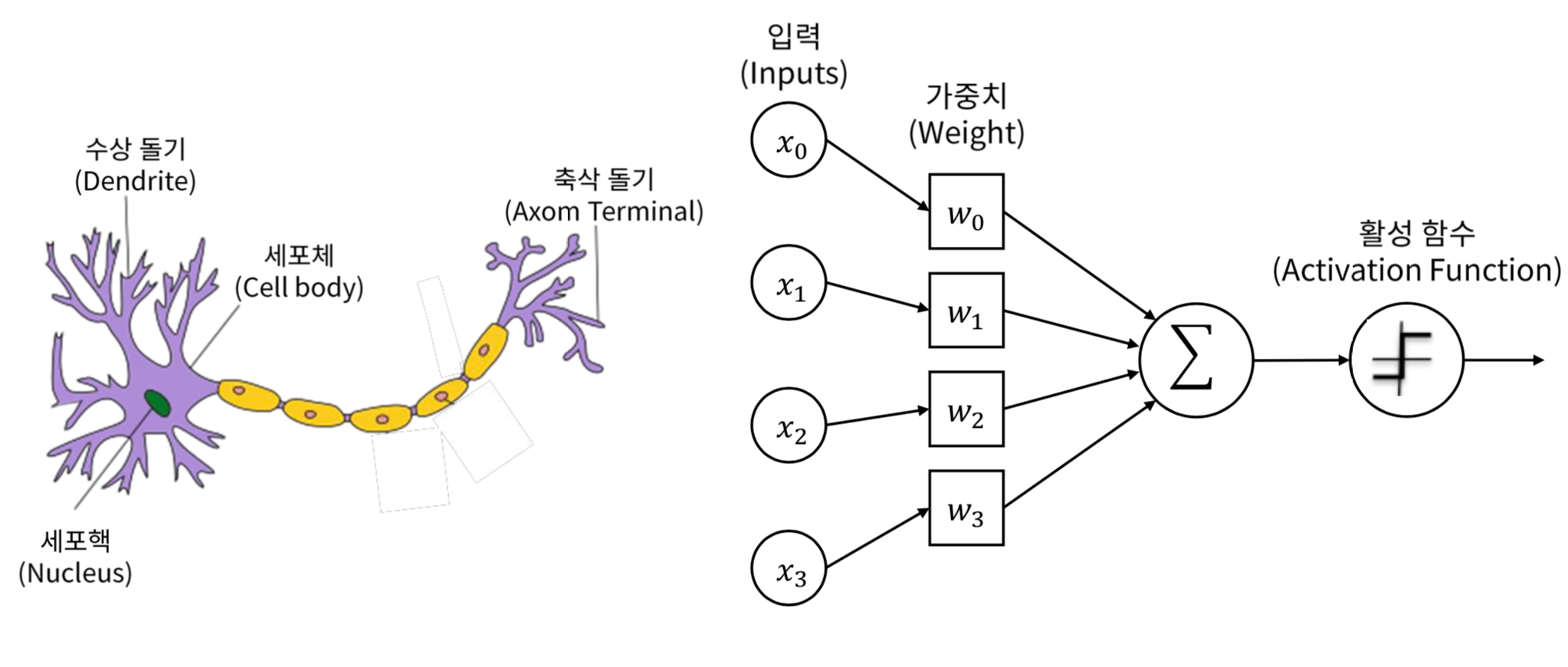
이름 그대로 위의 perceptron을 multi-layer 쌓아서 적층한 구조. 각 layer에서 다음 layer로 넘어가는 과정에서 non-linear function을 통과하니, 이때 점차 model에 non-linearity가 생김. 따라서 이러한 구조가 3층이상으로 깊게 쌓이면 Deep-Neural-Network이라 함.
SIMD(Single Instruction Multiple Data)
—
여러 개의 data를 vector 형식으로 묶어서 처리하자!
**
파이썬으로 구현해보기!
Perceptron
class Perceptron():
	def __init__(self, num_features):
		self.num_features = num_features
		self.weights = np.zeros((num_features, 1), dtype=float)
		self.bias = np.zeros(1, dtype=float)

	def forward(self, x):
		# $\hat{y} = xw + b$
		linear = np.dot(x, self.weights) + self.bias # comp. net input
		# train에서 보면, y[i] 차원으로 데이터가 들어오니, vec * vec 연산.
		# linear = x @ self.weights + self.bias
		predictions = np.where(linear > 0., 1, 0) # step function - threshold
		return predictions

	# 'ppp' exercise
	def backward(self, x, y):
		# pred랑 ground_truth 값 비교.
		return y - self.forward(x)

	# 중간 중간 reshape이 과연 필요할까?
	def train(self, x, y, epochs):
		for e in range(epochs):
			for i in range(y.shape[0]):
				errors = self.backward(x[i].reshape(1, self.num_features), y[i]).reshape(-1)
				self.weights += (errors * x[i]).reshape(self.num_features, 1)
				self.bias += errors
	def evaluate(self, x, y):
		predictions = self.forward(x).reshape(-1)
		accuracy = np.sum(predictions == y) / y.shape[0]
		return accuracy
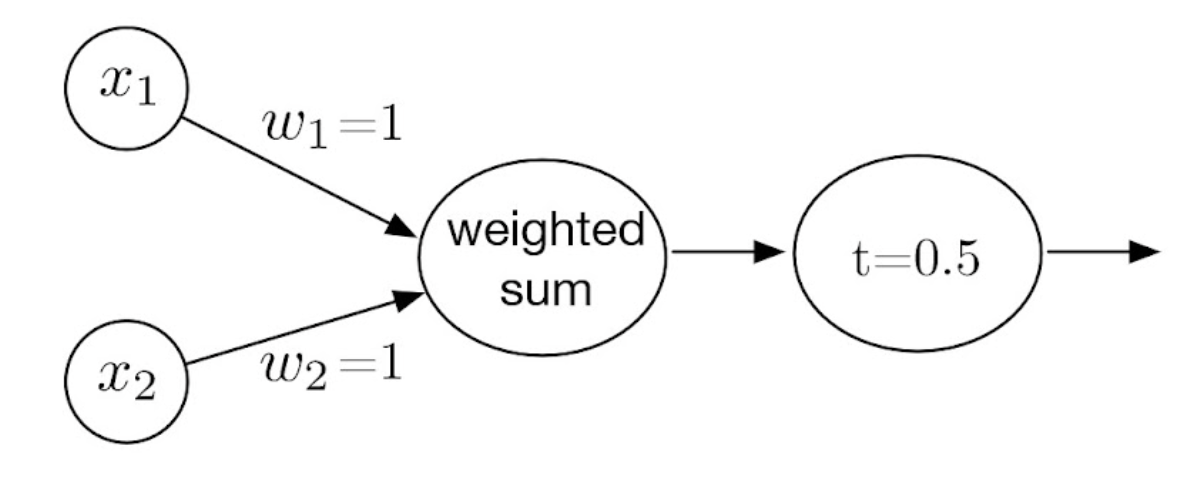
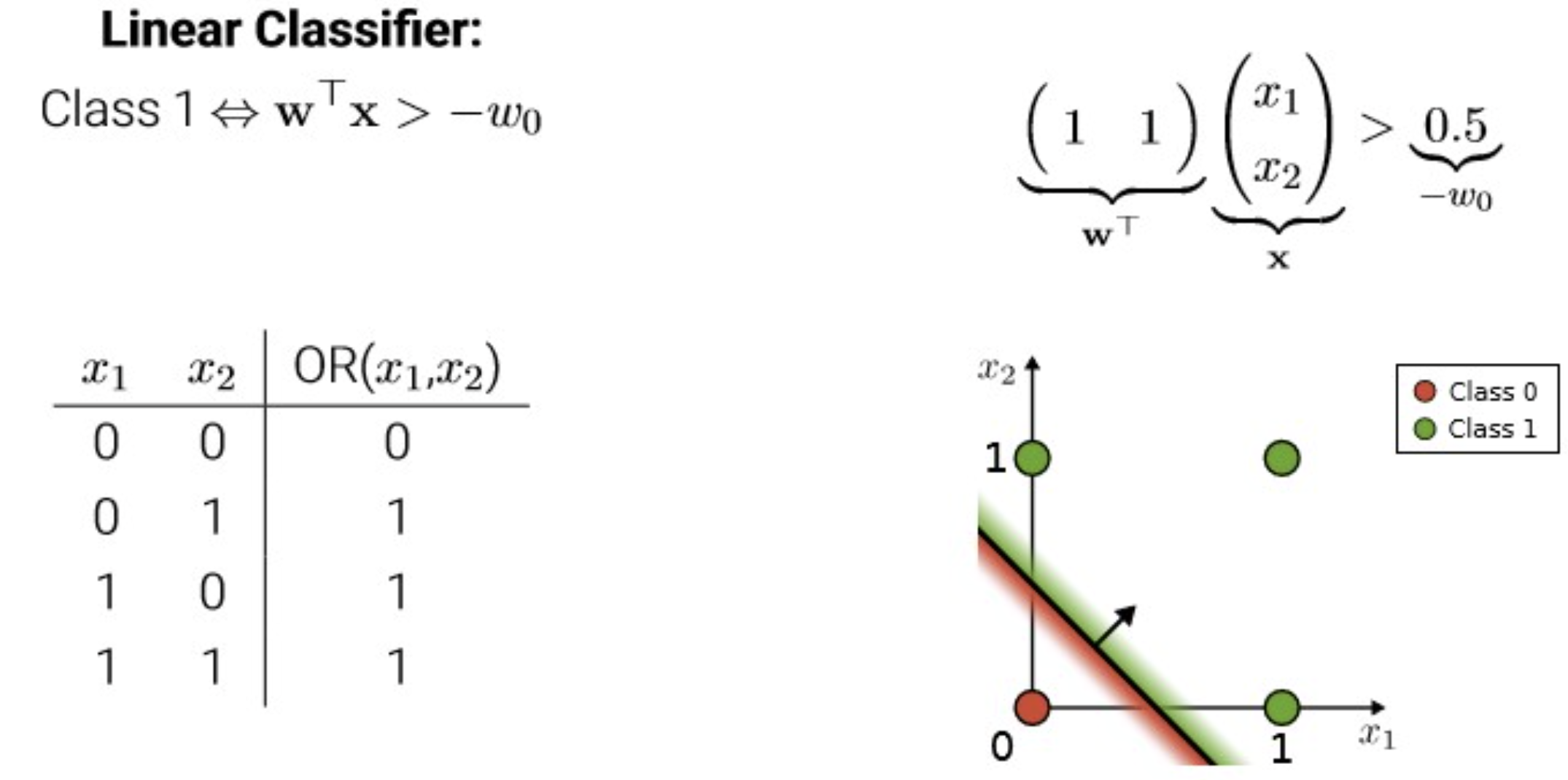
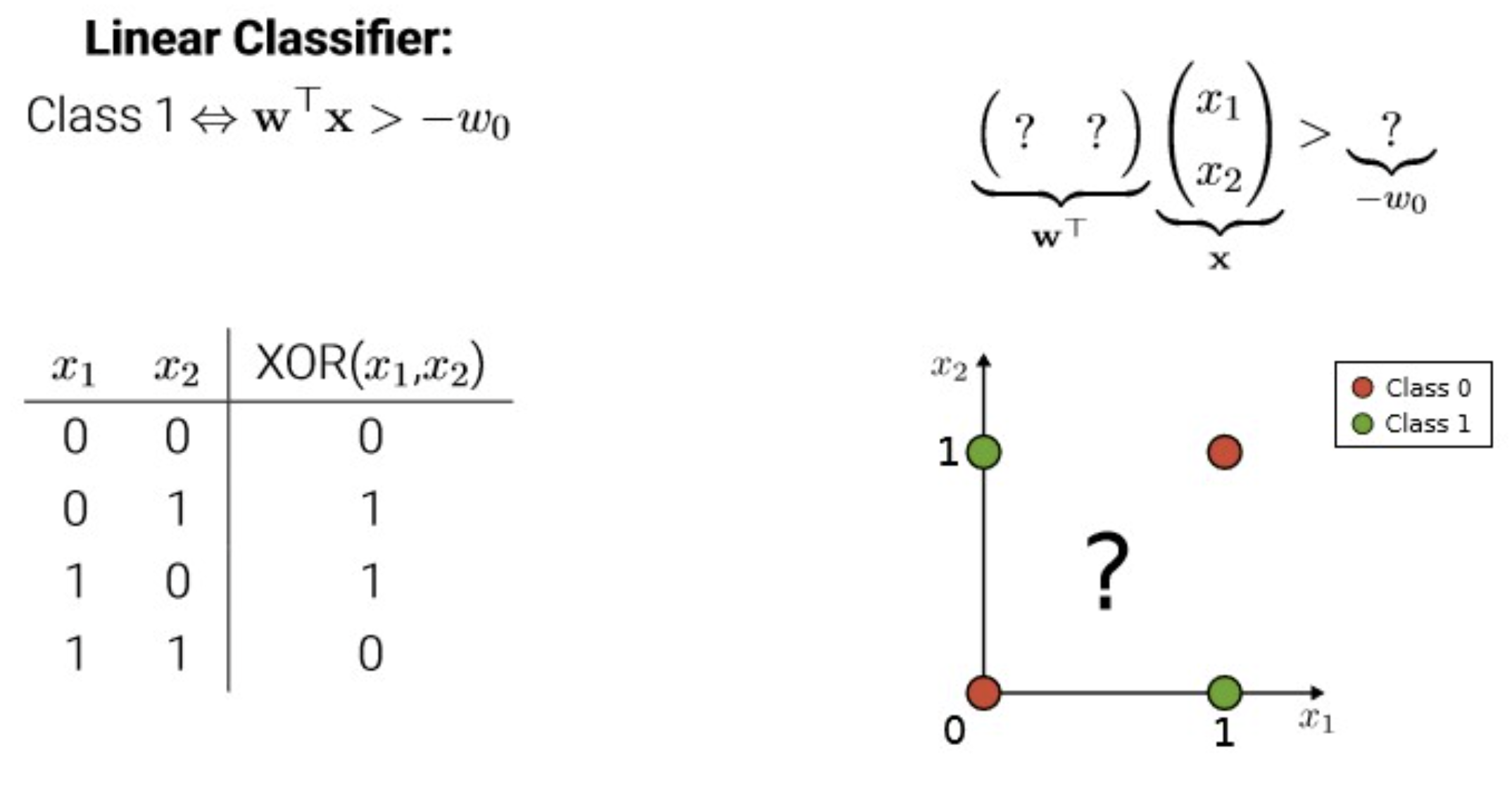
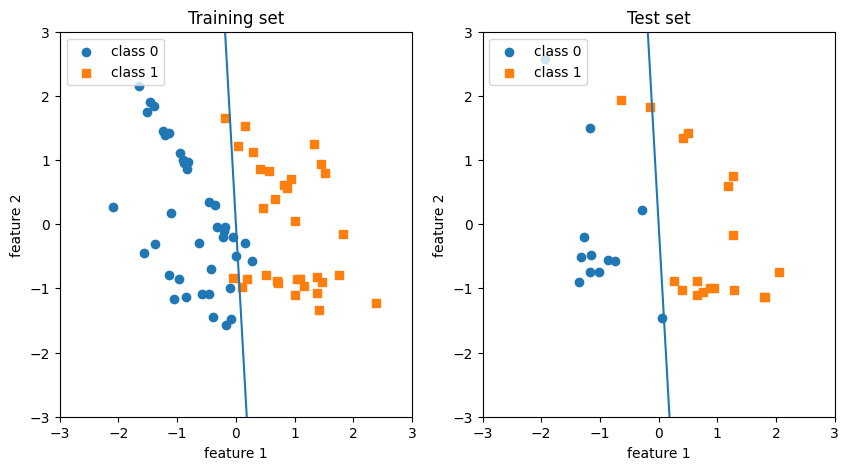
A set is convex if any line segment connecting 2 points in lies entirely within .